
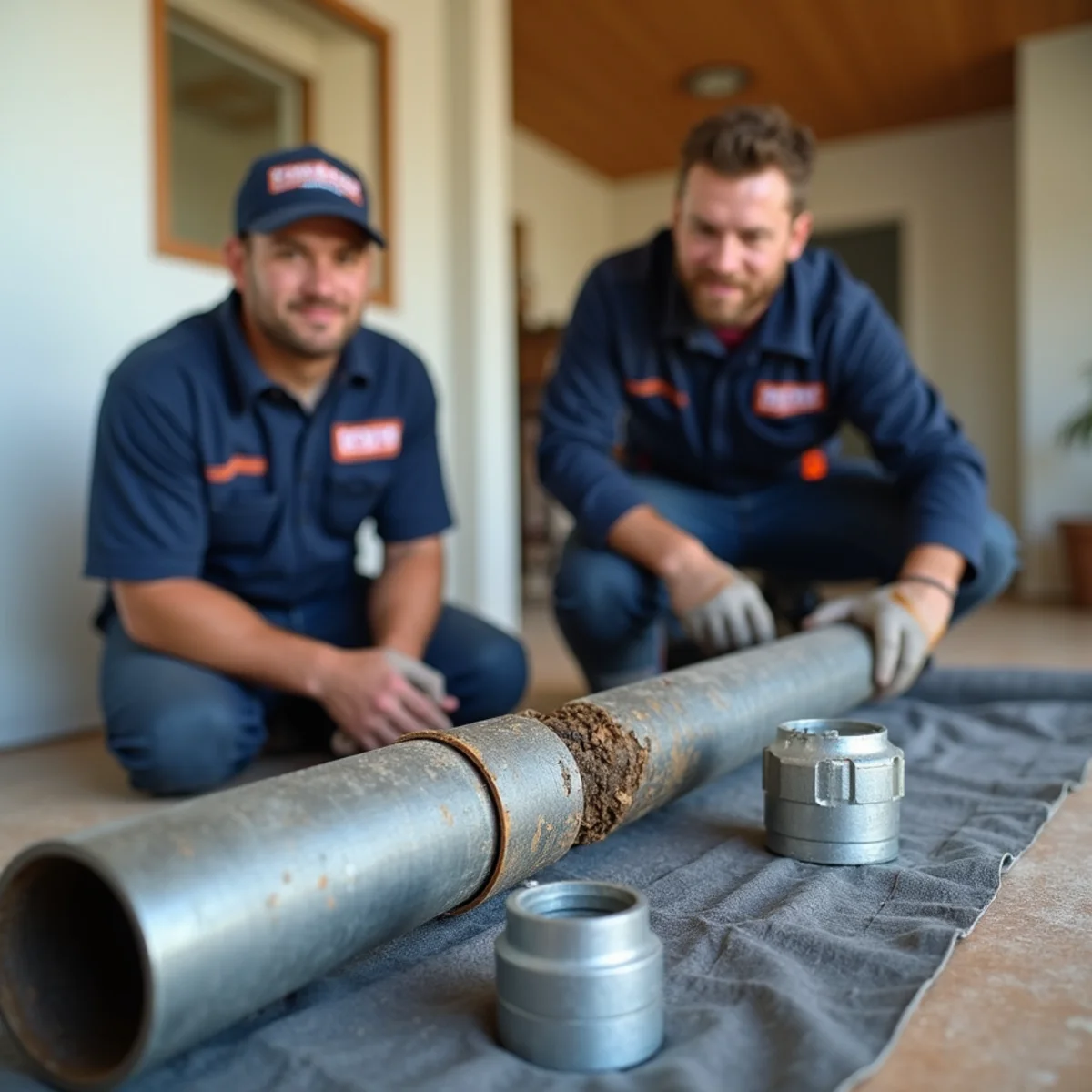
Older homes burst differently
A 2015 tract home in Eastlake and a 1952 bungalow near Kimball Park experience "burst pipe" as two different events. In the tract home, PEX rarely splits — a fitting fails. In the bungalow, corroded galvanized steel splits at a weakened section and the failure cascades along the same pipe over the following weeks.
This post is written specifically for the pre-1970 National City / South Bay housing stock. If your home is newer, the general first-15-minutes plan applies just as well.
Minute 0–5: Shutoff and safety
- Kill the main water valve (curb-side box or exterior lever near the front of the house).
- If the leak is hot-side, close the water heater cold inlet and turn gas control to "Pilot."
- If water has reached an electrical outlet or panel, kill the affected breaker first.
- Get pets and small children away from the wet area — walking on wet tile with dust and drywall bits is a fall risk.
Minute 5–15: Contain and document
- Photograph before you move anything.
- Move rugs, upholstery, paperwork, electronics out of the wet zone.
- Do not open the wall to "look at" the pipe. It makes both the repair and the insurance claim harder.
- Note the exact time you shut the water off.
Minute 15–30: Call the plumber and start drying what you can
- Call (831) 290-4327 for emergency plumbing — live dispatch answers.
- If you have a shop vac and the wet area is drywall/tile, start extracting standing water. Skip carpet — leave that for the extractor we bring.
- Open windows if the weather allows to start air movement.
Minute 30–60: Insurance call and plumber arrival
- Call your homeowners insurance line and open a claim number. Do not commit to a specific repair scope yet — you want the plumber's estimate first.
- When the plumber arrives, walk them through what you know: when the burst started, whether you shut water immediately, what other symptoms you had before (bill spikes, low pressure, rust in the tap).
The old-house question the newer-house homeowner never has to answer
At the end of the visit, if you are on original galvanized supply lines, you will be asked to make a call that has real dollar implications:
Option A — Spot repair. Replace the failed section with new PEX or copper. Fast, cheap ($350–$900), and the rest of the system remains at the same age it was this morning.
Option B — Partial repipe. Replace the branch that failed plus the branch most obviously next to fail. Middle cost ($2,500–$5,500), addresses the highest-risk sections, leaves some older pipe in place.
Option C — Whole-house repipe. Replace every supply line in the house. Higher cost ($6,800–$14,500 depending on size and material), addresses the failure mode entirely, adds 25+ years to the plumbing system.
The right answer depends on:
- Age of the pipe. If it is truly 60+ year old galvanized, a spot repair is often false economy — another burst is a matter of when, not if.
- How many bursts you have had. Second burst in a year: strong signal to repipe. Third: no question.
- How long you plan to be in the house. Under 3 years: spot repair is often fine, disclose to buyers. Over 5 years: repipe is cheaper long-term.
- Insurance track record. Multiple insurance claims raise premiums or trigger non-renewal. A repipe stops the claims.
Our answer at the door is honest: what we would do if it were our home. No pressure, written quote either way.
The insurance angle
A sudden, accidental burst is a covered peril on standard California homeowners insurance for the water damage (not the pipe repair itself). Common covered items: drywall replacement, flooring, contents, drying equipment, and often the "access" cost to reach the pipe. Not covered: the pipe repair itself, and gradual leaks that the insurer can argue "should have been noticed sooner."
Get the plumber and the adjuster on the same conversation early. It matters.
Preventing the next burst
If you have been through one burst on original galvanized in a South Bay home, the odds of another are meaningful. Two prevention steps that cost little:
- Have your main pressure regulator checked. Chronic pressure over 80 PSI accelerates every failure.
- Install a whole-house water alarm and shutoff (Flo by Moen, Phyn, LeakSmart). Insurance often discounts premiums when one is installed.
More on the full galvanized replacement decision here and on what your bill of materials should look like for a proper National City repipe.
Serving the whole City of San Diego and the South Bay for emergency response.