Orangeburg — the pipe National City hates
If your home was built between 1945 and 1975 there is a real chance the sewer lateral running from your foundation to the city main is Orangeburg — a tar-impregnated wood-fiber pipe that was marketed as cheaper and easier to install than clay. In dry conditions it does fine. Under load and moisture, it deforms into an oval shape, then collapses. Once it deforms, you cannot rehab it. It has to come out.
Symptoms that scream Orangeburg on the camera: a pipe that looks flattened top-to-bottom rather than round, root balls where joints have opened, standing water in visible sections, and a very characteristic softness when the camera nose pushes against the wall.
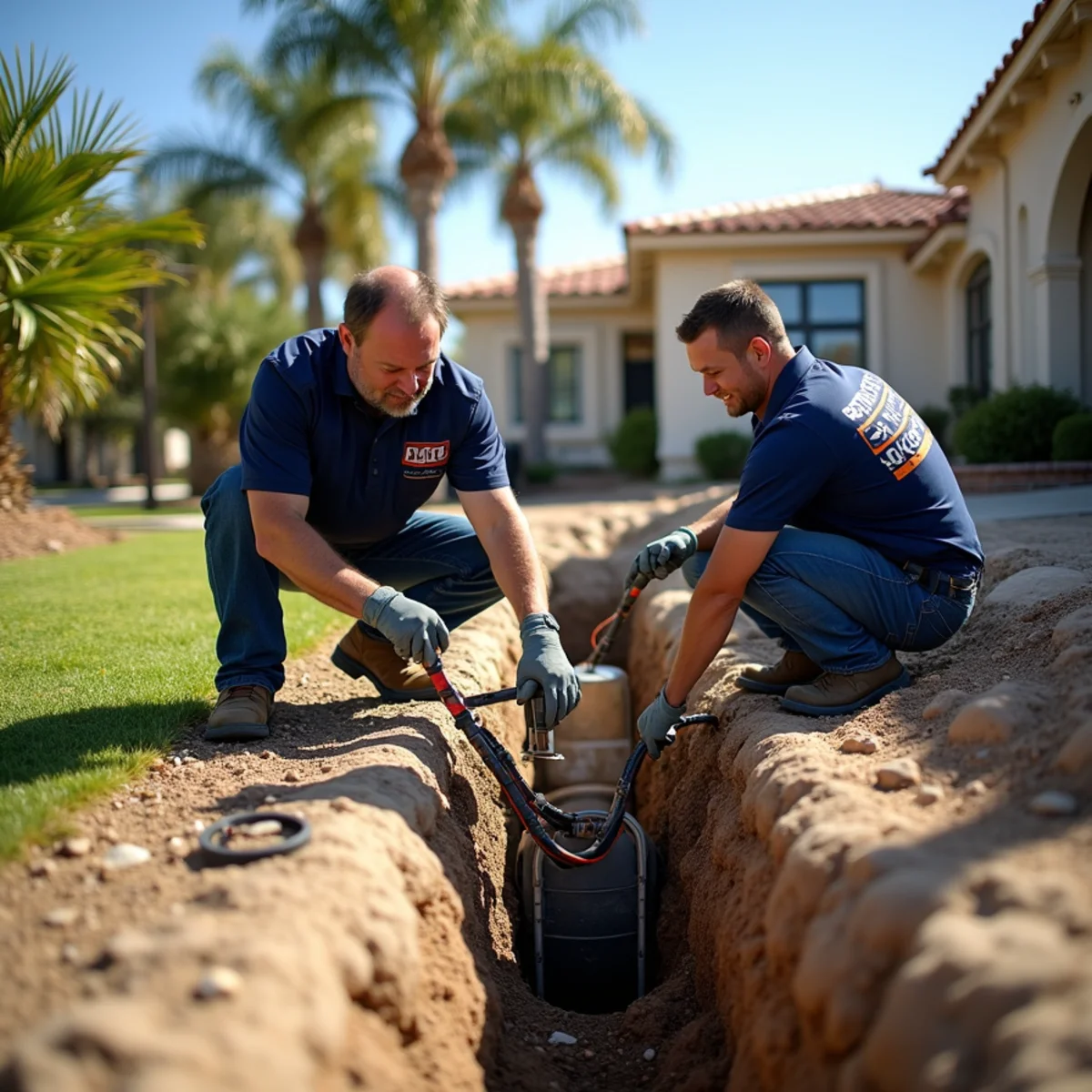
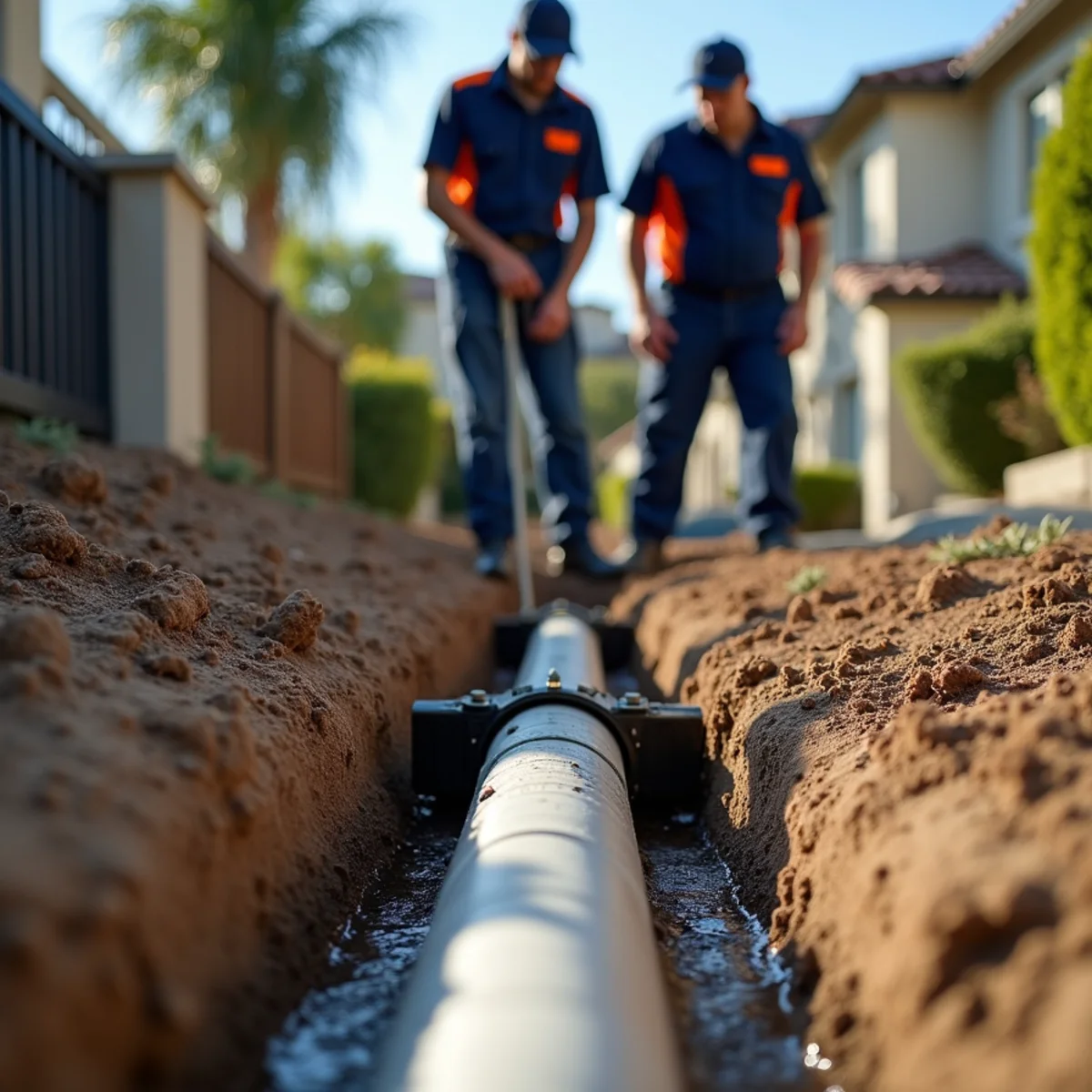
The fix: pipe bursting is usually the right method. A pointed bursting head is pulled through the old Orangeburg, splitting it outward, while a new solid HDPE pipe follows behind. Two small pits — one at the house, one at the property line — and the yard stays mostly intact. In two days you have a 50-year pipe.
Cast iron and clay laterals
Cast iron laterals from the 1920s–60s fail from the inside — scale, then rust-through at the bottom (channeling). If the walls are still intact but scaled, CIPP lining is often the right call: a felt tube saturated with resin is pulled into the pipe and cured, forming a new smooth wall.
Vitrified clay laterals develop offset joints as soil shifts and become a highway for tree roots. If the offset is minor, CIPP handles it. If the joint is heavily offset or a section is missing, pipe bursting or open-trench replacement.
Why trenchless is not a magic wand
Every trenchless technique has a geometry it works with and one it does not. CIPP needs a pipe still roughly round enough to receive the liner. Pipe bursting needs a mostly straight run. Both need at least one accessible pit at each end. We will not sell you a trenchless job on a line where it will not perform — better to open a trench and be honest.
Root intrusion — a chronic problem, not a one-time fix
If you have mature ficus, magnolia, or eucalyptus over the sewer path, roots will find every joint. Cutting them out with a sectional cutter buys you 6–24 months. Lining the pipe or replacing it in HDPE gives you a permanent seal against roots.
What the permit gets you
City-inspected sewer work protects you at resale. San Diego County disclosure forms require you to state whether sewer work was permitted. An unpermitted repair can force a buyer's negotiation for a re-inspection at your expense. We handle every permit as part of the flat price.
Our shop is at 1010 W 19th St, three minutes from I-5 and five minutes from National City Blvd. Camera inspection is included on every sewer repair or replacement quote. You watch the footage before you sign. Call (831) 290-4327 and a live dispatcher will confirm a real ETA before you hang up — no call center runaround, no "we'll get back to you."