The pipe made of paper
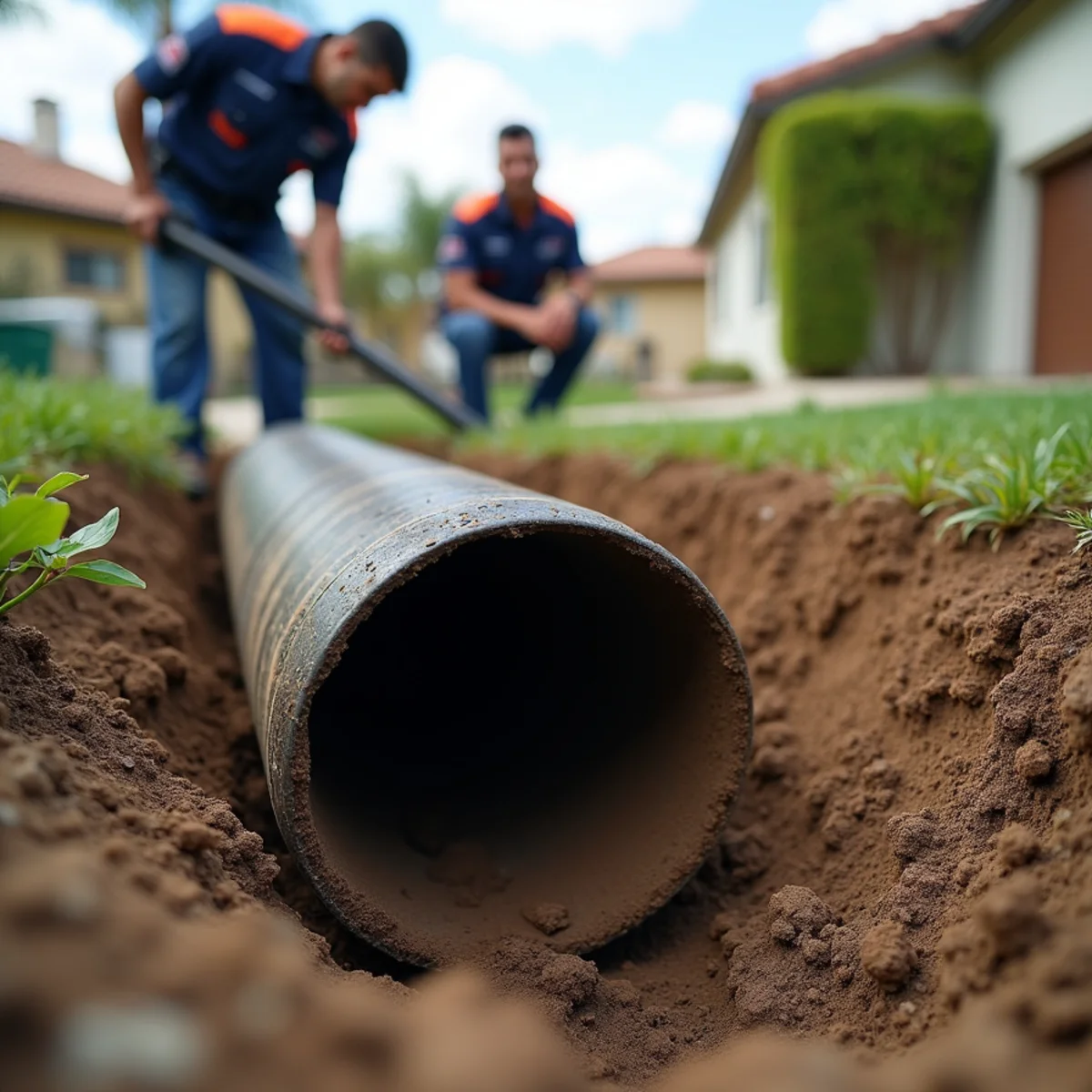
Orangeburg pipe — named for Orangeburg, New York, where the Fiber Conduit Company manufactured it — is a sewer lateral pipe made from wood pulp fibers wound into a tube and impregnated with coal tar pitch. It was marketed from the 1860s onward for various uses and became the standard low-cost residential sewer lateral pipe from roughly 1945 through the mid-1970s.
Why it was popular: it was cheaper than clay, easier to cut, lighter to transport, and installed quickly. In postwar tract housing across San Diego, National City, Chula Vista, Coronado, and Imperial Beach, contractors used Orangeburg by the mile.
Why we have a problem with it now: it deforms and collapses.
How Orangeburg fails
The failure mode is unique to Orangeburg. Under long-term load from soil weight above and moisture around it, the round pipe cross-section deforms into an oval shape. Waste flow slows in the flattened section. Eventually the oval collapses inward on itself.
Once deformed, the pipe cannot be rehabilitated. Cleaning it does not help. Hydro jetting can accelerate the collapse. The only fix is replacement.
How to spot Orangeburg
In the ground (via sewer camera):
- Pipe wall looks fibrous, not smooth
- Round cross-section that appears squashed or oval
- Sections that look partially collapsed inward
- Root balls at joints (Orangeburg joints open easily)
- Waste puddled in flattened low spots
Above ground:
- Multiple sewer backups in a home built 1945–1975
- Backups that clear briefly then recur within weeks
- Wet or lush green patches along the sewer path in your yard
In records:
- If you have plumbing plans from the original build (rare), Orangeburg is often labeled as "bituminized fiber pipe" or "coal-tar impregnated conduit"
Why cutting it, cleaning it, or lining it does not fix Orangeburg
Cutting roots buys nothing meaningful with Orangeburg. The joints are already compromised and the pipe body is already deforming.
Hydro jetting can actively worsen collapse. High-pressure water can breach weakened walls.
CIPP lining requires a substantially intact host pipe to receive the liner. Deformed or partially collapsed Orangeburg does not provide the geometry a liner needs.
Cementing / sleeve patches are temporary at best.
The realistic options are:
- Pipe bursting — the usual choice. A bursting head is pulled through the old Orangeburg, splitting it outward, while a new solid HDPE pipe follows behind. Two small pits, one at the house and one at the property line. Yard between them stays intact.
- Open-trench replacement — for shallow laterals or where the pipe geometry does not allow bursting.
Cost ranges are in our trenchless cost guide.
The map of Orangeburg in San Diego County
Not every 1945–1975 home has Orangeburg — some builders used clay or early PVC. But the probability is meaningful across:
- National City postwar tracts west of Highland Ave and around Kimball Park
- South Bay Chula Vista neighborhoods off Third Ave and G Street
- Lemon Grove tracts off Broadway and Lemon Grove Ave
- Older San Diego neighborhoods (Golden Hill, Normal Heights, older Point Loma sections)
- Coronado Village-district properties
- Imperial Beach cottages near Palm Ave and Seacoast Dr
If your home is in that window and you have any recurring sewer issue, camera work is the way to confirm.
The camera is non-negotiable
Everything above is theoretical until we see the actual pipe. Every sewer diagnosis in this age range starts with a camera inspection.
We push a self-leveling camera from the house cleanout to the city main. You watch the footage on the monitor. If it is Orangeburg, you see it. If it is clay with roots, you see that. If it is cast iron with scale, you see that. Decisions from that point are grounded in what the camera showed.
We hand you the video file to keep.
The replacement decision
If the camera confirms Orangeburg:
- Do it now if you have had one or more backups already
- Do it in the next 12 months if the pipe looks deformed but you have not backed up yet
- Do it before you sell to avoid a buyer negotiation at closing
- Add a service line endorsement to your insurance ASAP (see our California sewer insurance post) so the next event is covered
Waiting on a known Orangeburg failure is a losing bet. The next backup is Category 3 sewage in your home.
Financing
Sewer replacement is eligible for financing. 0% intro plans available with approved credit.
More on the sewer line repair service page.