The number that runs your plumbing costs
Sweetwater Authority — serving National City, Chula Vista, Bonita, and parts of the South Bay — delivers water with hardness typically measured at 15 to 19 grains per gallon (gpg). By the U.S. Geological Survey's classification, anything over 10.5 gpg is "very hard."
That number quietly runs the replacement cycle of every hot-water appliance in your home.
What hardness actually is
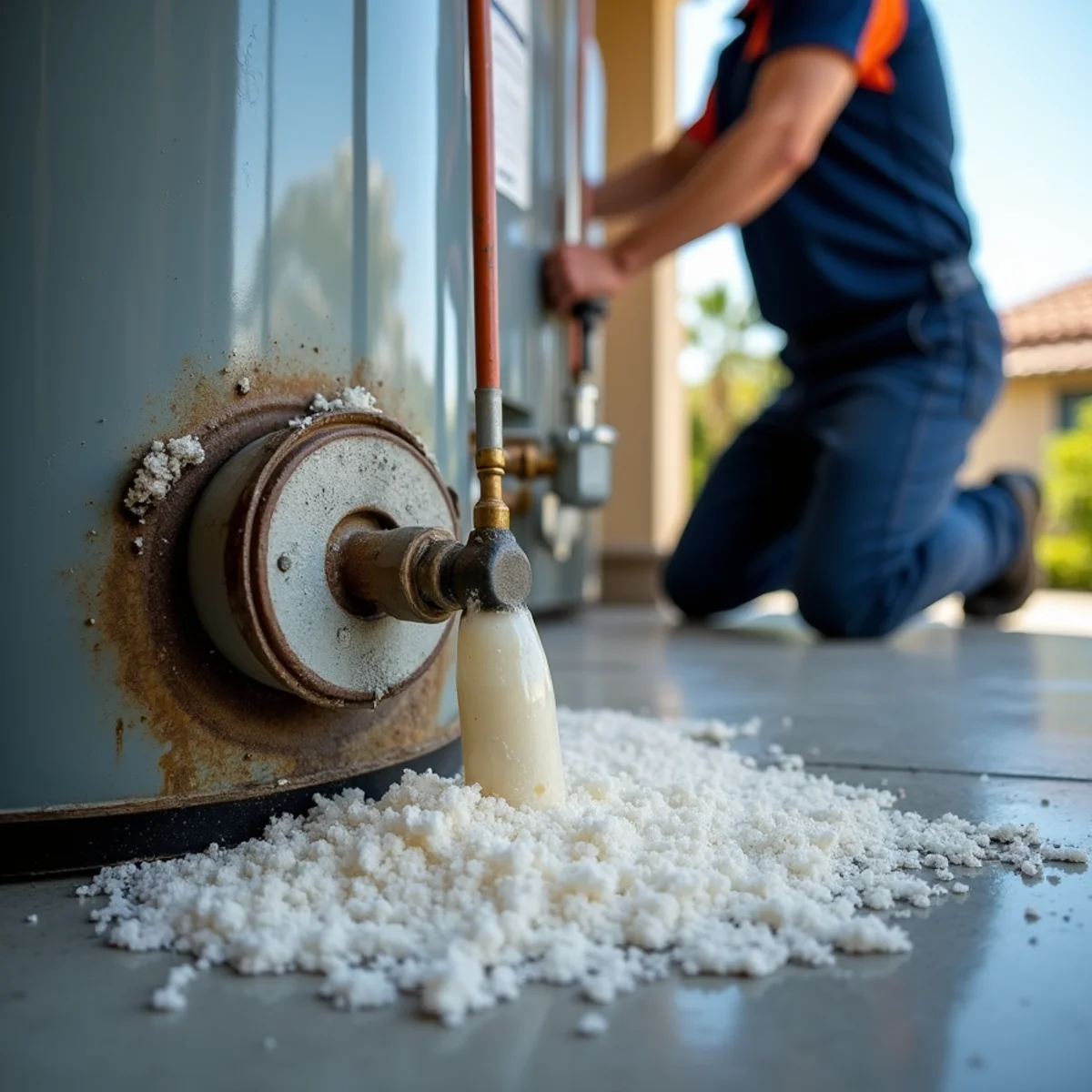
Water hardness is dissolved calcium and magnesium — minerals picked up as water passes through rocks and soil. In liquid form they are invisible. When water is heated, the calcium precipitates out as calcium carbonate (scale) and deposits on whatever surface heated it.
Every 100 gallons of hot water through your system at 17 gpg leaves behind roughly 5 grams of solid calcium carbonate — a chalky white crust — somewhere downstream. Over years, "somewhere" becomes real quantities.
Where the scale lands
Water heater bottom (tank type). Scale insulates the burner or element from the water it is heating. The burner has to work harder to hit the same temperature. Overheated steel fatigues faster. Tank life shortens from an advertised 12 years to 8–10 years.
Tankless heat exchanger. Every drop of water passes over the heat exchanger surface. Scale builds up in the narrow channels. Restricted flow triggers scale warnings, then error codes, then service calls. Without annual descaling, warranties can be voided.
Fixture aerators and shower heads. Scale clogs the small holes. Flow drops. Aerators need cleaning every 6–18 months.
Dishwasher heating elements and spray arms. Elements pit and fail early. Spray arms clog.
Washing machine heating elements (front-load HE units). Same story.
Coffee makers, ice machines, humidifiers. Every appliance that heats water builds scale.
The two prevention moves that pay back
1. Whole-house water softener. A properly sized salt-based ion-exchange softener removes hardness before it reaches your appliances. Installation: $1,800–$2,800. Payback timeline: 4–7 years on extended water heater life alone, faster if you count dishwasher, washing machine, coffee maker, and fixture savings.
Salt-free "conditioners" reduce scale on heat surfaces but do not remove hardness. Cheaper to install, less effective. We install both and tell you which fits your priorities. See the water softener service page for the deeper comparison.
2. Annual water heater flush (or tankless descaling). For tank heaters: drain a few gallons through the drain valve every year to flush sediment. For tankless: annual acid descaling (vinegar or manufacturer solution) through the service valves. Cost: DIY for a tank ($0), professional for a tankless ($200–$300/year).
Both extend water heater life dramatically. Neither is done by most homeowners.
What we see in Chula Vista and National City
Regular calls:
- Water heaters dying at 8–10 years instead of the promised 12
- Tankless units on their second failed heat exchanger by year 6
- Fixture aerators completely blocked, requiring replacement
- Shower heads reduced to trickles
- Reversed-polarity soap and shampoo behavior (won't lather, won't rinse)
- Dry, itchy skin after showers
- Spotted glassware and dishes despite dishwasher rinse aid
- White scaly rings in toilets
Every one of these traces to the same 17 gpg number.
Costs of ignoring hardness
Over 10 years, an unsoftened South Bay home experiences roughly:
- 1.5 to 2 water heater replacements ($3,000–$5,500 in tanks alone)
- Multiple fixture aerator and shower head replacements ($150–$300)
- 20–30% higher soap/detergent/shampoo purchases ($400–$800)
- Reduced dishwasher and washing machine life
- One or more tankless heat exchanger issues if you have tankless
Softener install and salt refills over the same 10 years: roughly $2,800–$3,600 total.
The softener is a genuinely money-saving purchase in Sweetwater's water — not a luxury.
Drinking water is a separate question
Softened water tastes slightly different (a touch of sodium from the ion exchange) and some people prefer their drinking water unsoftened. Common solutions:
- Unsoftened tap at the kitchen sink — plumb a bypass around the softener for the cold drinking water tap
- Under-sink reverse osmosis — filter softened or unsoftened water to near-zero TDS for a dedicated drinking tap. $650–$1,200 installed.
We usually recommend the RO route. Softened water everywhere for the appliances, RO drinking water at the sink.
Testing your specific water
We test your water hardness on-site at no cost with a repair or install visit. Sweetwater's baseline is well documented, but your specific address can vary depending on which pressure zone you are on and blend timing.
More on water softener install and water heater service.