The soil under your house is not stable
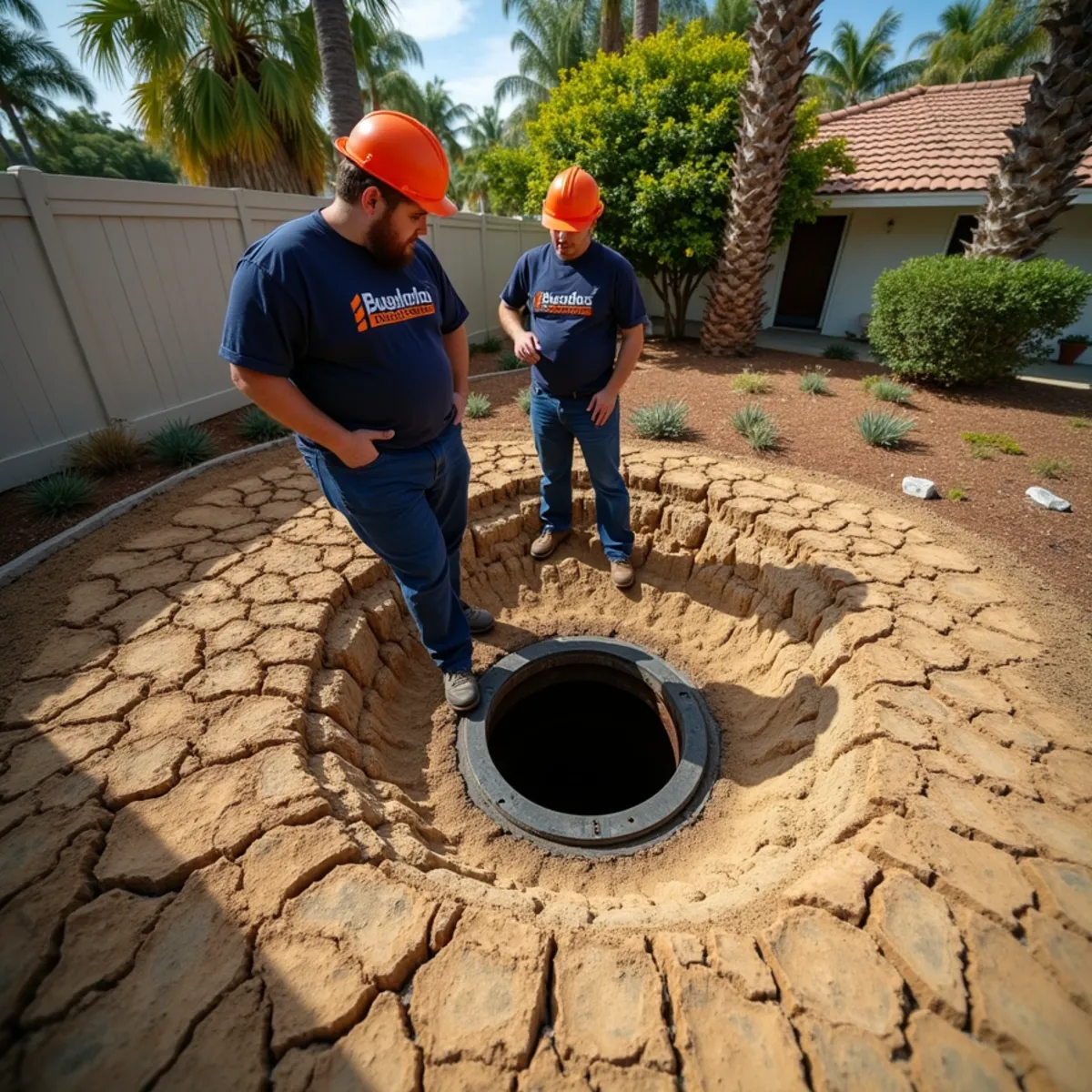
Much of San Diego County — especially the South Bay, East County valleys, and inland Riverside — sits on expansive clay soils. Expansive soils absorb water and swell when wet, then contract when dry. The cycle repeats every year and every rain event.
For homes, this movement affects:
- Slab foundations (cracked slabs, popped tile)
- Under-slab plumbing (slab leaks, joint failures)
- Sewer laterals (joint offsets, root intrusion openings)
- Landscaping and hardscape (cracked driveways, tilted patios)
The plumbing consequences are what we deal with weekly.
How clay movement stresses your sewer lateral
Your sewer lateral is a straight-ish run of pipe from your house cleanout to the city main. Depending on your home it is:
- Clay pipe with rubber-gasketed joints every 3–4 feet (older builds)
- Orangeburg in continuous sections with joints (mid-century)
- ABS or PVC in longer sections with fewer joints (modern)
Every wet-dry cycle, the soil around the pipe expands and contracts. Straight pipe stays roughly straight, but joints move. Over decades:
- Clay joints open a small crack — roots find it, grow through, and cause backups
- Orangeburg joints open, and the pipe body deforms adjacent to the joint
- Even PVC glued joints can shear on aggressive soil movement (rare but real)
Symptoms of clay-driven lateral damage
- Recurring backups every 6–18 months in a South Bay home 30+ years old
- Wet or lush green patches along the sewer path in your yard
- Sewage smell in the yard
- Multiple fixtures slow-draining together
- Cracks in your driveway or patio near the sewer path
What our camera shows
- Offset joints — pipe sections that no longer meet smoothly; each has a small step. Roots love these.
- Root balls — masses of roots growing through joint gaps into the pipe interior
- Bellies — sagging sections where the pipe has settled below grade and waste sits in a pool
- Longitudinal cracks — stress fractures in the pipe body from soil pressure
- Complete offsets — sections that have moved so far they no longer meet at all
Each has a different fix. Small offsets and root intrusion can often be lined with CIPP. Big offsets and full displacements need pipe bursting or open trench.
Slab leaks — same problem, different pipe
The same soil movement that stresses your sewer lateral stresses under-slab supply lines. Soft copper hot-water lines run through or under the slab flex with every soil movement. Over decades, joints and abrasion points fail — slab leaks.
If you have had one slab leak, more are coming — same soil, same pipe stress, same failure mode. This is why we often recommend an overhead reroute (abandon the under-slab line, run new PEX through the attic) instead of just a spot repair.
Prevention — what actually helps
Consistent watering around your foundation. Clay soils crack when they dry out at the foundation edge. A drip irrigation ring 3–5 feet out from the foundation, running short cycles year-round, keeps soil moisture more even and reduces movement stress. Do not overwater — you want moist, not saturated.
Regular sewer camera inspection. Every 5 years on any South Bay home over 25 years old. Early detection of joint offset or root intrusion is much cheaper than post-backup repair.
Root barriers when planting near sewer paths. Physical barriers (root guard fabric or plastic panels) inserted vertically between mature trees and the sewer path slow root migration to the pipe.
Trenchless liner as insurance. If your lateral is showing early signs — small offsets, minor root intrusion — a CIPP liner creates a joint-free interior surface. Roots cannot penetrate. Small offsets no longer matter.
What NOT to do
- Do not plant new large trees within 15 feet of your sewer line. Ficus, magnolia, eucalyptus, and Chinese elm are the worst offenders.
- Do not ignore recurring backups. Each event is Category 3 water in your home.
- Do not let landscaping crews trench near your lateral without knowing where it runs. A cut pipe on a wet day turns your yard into a wetland.
- Do not assume "the last plumber cleared it, so we're fine." Clearing is not fixing.
Insurance angle
Service line endorsements typically do cover damage from soil movement (though some carriers specifically exclude "earth movement"). Read your policy language, and see our California sewer insurance post for the general framework.
More on sewer line repair options and slab leak service.